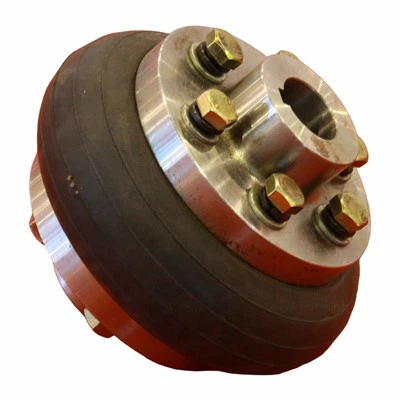
Hey there! As a supplier of Spring Taper Grid Couplings, I've seen firsthand how these nifty devices are used in a wide range of applications. Today, I want to talk about what you need to consider when using a Spring Taper Grid Coupling in a vertical shaft application.
First off, let's quickly go over what a Spring Taper Grid Coupling is. It's a type of flexible coupling that uses a grid spring to transmit torque between two shafts. The spring design allows for some misalignment between the shafts, which is super handy in many industrial settings. You can learn more about it on our website Spring Taper Grid Coupling.
Gravity and Lubrication
One of the biggest differences when using a Spring Taper Grid Coupling in a vertical shaft application is the effect of gravity. In a horizontal setup, the lubricant tends to stay in place around the coupling components. But in a vertical shaft, gravity can cause the lubricant to drain away. This means you need to pay extra attention to lubrication.
You'll want to use a high - quality lubricant that has good adhesion properties. A lubricant that can stick to the coupling parts even when gravity is pulling it down. Also, consider the frequency of lubrication. In a vertical application, you might need to lubricate more often than in a horizontal one.
Alignment Challenges
Alignment is crucial for any coupling, but it's even more important in a vertical shaft application. Misalignment in a vertical shaft can lead to uneven wear on the coupling components. The spring in the Spring Taper Grid Coupling can handle some misalignment, but excessive misalignment can cause premature failure.
When installing the coupling in a vertical shaft, make sure to use proper alignment tools. Laser alignment tools are great for getting accurate results. You should also check the alignment periodically, especially if the equipment is subject to vibrations or other external forces.
Load Distribution
In a vertical shaft, the load distribution on the coupling can be different compared to a horizontal shaft. The weight of the equipment attached to the shaft can add an extra load on the coupling. This means you need to carefully calculate the load capacity of the Spring Taper Grid Coupling.
You should consider the static load (the weight of the equipment) as well as the dynamic load (the forces generated during operation). Make sure the coupling you choose can handle the total load without being over - stressed.


Installation and Maintenance
Installing a Spring Taper Grid Coupling in a vertical shaft can be a bit more challenging than in a horizontal one. You need to make sure the coupling is properly seated on the shafts. It's a good idea to follow the manufacturer's installation instructions carefully.
Maintenance is also important. Regularly inspect the coupling for signs of wear, such as cracks in the spring or excessive play. If you notice any issues, replace the worn parts as soon as possible.
Comparison with Other Couplings
There are other types of couplings available, such as Snake Spring Couplings and Flexible Flanged Grid Coupling. Each type has its own advantages and disadvantages in a vertical shaft application.
Snake Spring Couplings are known for their high flexibility. They can handle a greater degree of misalignment compared to Spring Taper Grid Couplings. However, they might not be as suitable for high - torque applications in a vertical shaft.
Flexible Flanged Grid Couplings are more rigid than Spring Taper Grid Couplings. They are better at handling high - torque loads but might not be as forgiving when it comes to misalignment.
Thermal Considerations
In a vertical shaft application, heat dissipation can be a concern. The coupling generates heat during operation, and in a vertical setup, it might be more difficult for the heat to escape. This can lead to an increase in temperature, which can affect the performance and lifespan of the coupling.
You can use heat - resistant materials for the coupling components or add cooling mechanisms, such as fans or heat sinks, to help dissipate the heat.
Environmental Factors
The environment in which the vertical shaft operates can also affect the performance of the Spring Taper Grid Coupling. If the area is dusty or has a lot of moisture, it can cause corrosion or damage to the coupling.
Make sure to choose a coupling that is designed to withstand the specific environmental conditions. You might also need to take additional measures, such as using protective covers or seals, to keep the coupling in good condition.
Cost - Benefit Analysis
When considering using a Spring Taper Grid Coupling in a vertical shaft application, it's important to do a cost - benefit analysis. Compare the cost of the coupling with its performance and durability.
While a more expensive coupling might have better features and a longer lifespan, it might not always be necessary. You need to balance the cost with the requirements of your application.
Conclusion
Using a Spring Taper Grid Coupling in a vertical shaft application requires some additional considerations. From lubrication and alignment to load distribution and environmental factors, there are many things to keep in mind.
If you're in the market for a Spring Taper Grid Coupling for your vertical shaft application, we're here to help. Our team of experts can provide you with the right advice and products to meet your needs. Don't hesitate to reach out to us for more information and to start a procurement discussion.
References
- Manufacturer's installation and maintenance guides for Spring Taper Grid Couplings.
- Industry standards for shaft couplings in vertical applications.