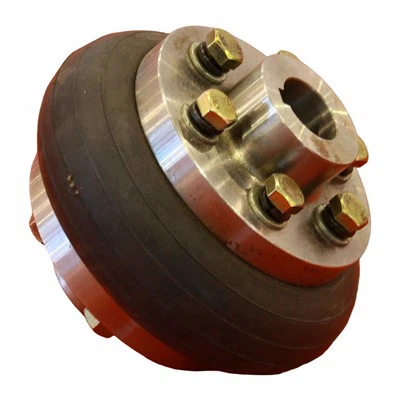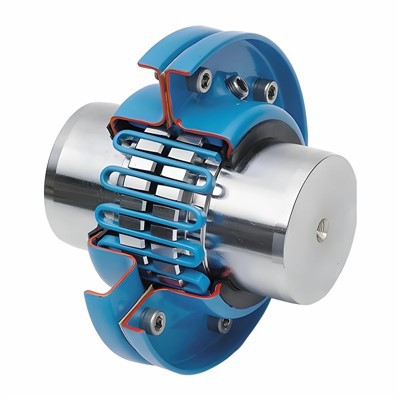
Determining the torque capacity of a shaft coupling is a crucial step when you're in the market for one. As a shaft coupling supplier, I've seen firsthand how important it is to get this right. A coupling that can't handle the required torque will lead to premature failure, downtime, and potentially costly repairs. So, let's dive into how you can figure out the torque capacity you need.
Understanding Torque
First off, what exactly is torque? Torque is a measure of the force that can cause an object to rotate around an axis. In the context of shaft couplings, it's the amount of rotational force that the coupling can transmit from one shaft to another. It's usually measured in units like Newton - meters (N·m) or foot - pounds (ft - lb).
When you're looking at a coupling, you need to consider the maximum torque that the system will experience. This isn't just the normal operating torque but also any peak torques that might occur during startup, shutdown, or under abnormal operating conditions.
Factors Affecting Torque Capacity
There are several factors that can influence the torque capacity of a shaft coupling.
1. Material
The material of the coupling plays a huge role. For example, couplings made from high - strength steel can generally handle more torque than those made from aluminum. The material's properties like yield strength and ultimate tensile strength are key determinants. A coupling made of a material with high yield strength can withstand greater stress before it starts to deform plastically, which means it can transmit more torque.
2. Design
The design of the coupling is also very important. Different types of couplings have different torque - transmitting capabilities. For instance, a 10mm Flange Coupling is known for its relatively high torque capacity. Its design allows for a large contact area between the two shafts, which helps in distributing the torque evenly. On the other hand, a Star Elastomeric Coupling is more flexible but may have a lower torque capacity compared to a flange coupling. The elastomeric element in this coupling helps in absorbing shock and vibration but also limits the amount of torque it can transmit.
3. Shaft Size
The size of the shafts that the coupling will connect is another factor. Larger shafts can generally handle more torque, and the coupling needs to be sized accordingly. If the coupling is too small for the shafts, it won't be able to transmit the required torque effectively.
4. Operating Conditions
The environment in which the coupling will operate also affects its torque capacity. High temperatures can reduce the strength of the coupling material, which in turn reduces its torque - handling ability. Similarly, exposure to chemicals or corrosive substances can damage the coupling and lower its torque capacity.
Calculating Torque Capacity
There are a few ways to calculate the torque capacity you need.
1. Based on Power and Speed
If you know the power (P) of the system in kilowatts (kW) and the rotational speed (n) in revolutions per minute (RPM), you can calculate the torque (T) using the following formula:
[T=\frac{9550\times P}{n}]
This formula is based on the relationship between power, torque, and speed. For example, if you have a motor with a power of 5 kW running at 1500 RPM, the torque can be calculated as:
[T=\frac{9550\times5}{1500}\approx31.83\ N\cdot m]


However, this is just the normal operating torque. You need to account for any peak torques that might occur. A common rule of thumb is to multiply the calculated torque by a service factor. The service factor takes into account things like shock loads, starting torque, and variations in the load. Service factors can range from 1.0 for smooth - running applications to 3.0 or more for applications with high shock loads.
2. Using Manufacturer's Data
Most coupling manufacturers provide torque - capacity charts for their products. These charts are based on extensive testing and take into account the material, design, and other factors mentioned earlier. You can use these charts to select a coupling that can handle the calculated torque. For example, if you've calculated that you need a coupling with a torque capacity of 50 N·m, you can look at the manufacturer's chart to find a coupling that meets or exceeds this requirement.
Selecting the Right Coupling
Once you've determined the torque capacity you need, it's time to select the right coupling. As a shaft coupling supplier, I can tell you that there are many different types of couplings available, each with its own advantages and disadvantages.
If you need a coupling for a high - torque application with minimal misalignment, a API Compliant Diaphragm Coupling might be a good choice. These couplings are designed to handle high torques and are often used in applications like pumps, compressors, and generators.
On the other hand, if you need a coupling that can absorb shock and vibration, a Star Elastomeric Coupling could be the way to go. These couplings are commonly used in applications where there are sudden changes in load or speed.
Conclusion
Determining the torque capacity of a shaft coupling is a multi - step process that involves understanding the factors that affect torque, calculating the required torque, and selecting the right coupling for your application. As a shaft coupling supplier, I'm here to help you every step of the way. If you're in the market for a shaft coupling and need assistance in determining the right torque capacity or selecting the appropriate coupling, don't hesitate to reach out. We can work together to find the best solution for your specific needs.
References
- Machinery's Handbook, 31st Edition
- Coupling Manufacturer's Catalogs